

Table of Contents
- Best Orthopedic Braces for Injury Recovery: A Comparison
- How We Evaluated These Orthopedic Braces
- 1. Breg Fusion Knee Brace: Best for Post-Surgical ACL Recovery
- 2. DonJoy Fullforce ACL Knee Brace: Best for Athletes Returning to Sport
- 3. Bauerfeind Sport Knee Support: Best Compression for Athletic Recovery
- 4. DonJoy Tru-Pull Lite: Best for Patellar Tracking Issues
- When to Use a Hinged vs Compression Brace
- How to Measure for a Knee Brace That Fits Correctly
- Frequently Asked Questions
Last Updated: September 7, 2026
Best Orthopedic Braces for Injury Recovery: A Comparison
Choosing the right orthopedic braces for injury recovery often feels like navigating a maze of hinges, straps, and confusing medical jargon. The wrong choice can prolong your recovery, waste money, and even lead to re-injury. At Hudson Medical Co LLC, we know the decision comes down to matching the brace's mechanical function to your specific injury stage, not just picking the most popular model.
The best orthopedic braces for injury recovery are rigid, hinged models for severe ligament instability, while compression sleeves work best for mild pain and swelling management. Most guides focus on immediate pain relief, but a brace that supports long-term healing through proper biomechanical alignment will serve you better.
Quick Picks:
- Best for Post-Surgical ACL: Breg Fusion Knee Brace
- Best for Returning to Sport: DonJoy Fullforce ACL Knee Brace
- Best Compression for Athletics: Bauerfeind Sport Knee Support
- Best for Patellar Tracking: DonJoy Tru-Pull Lite
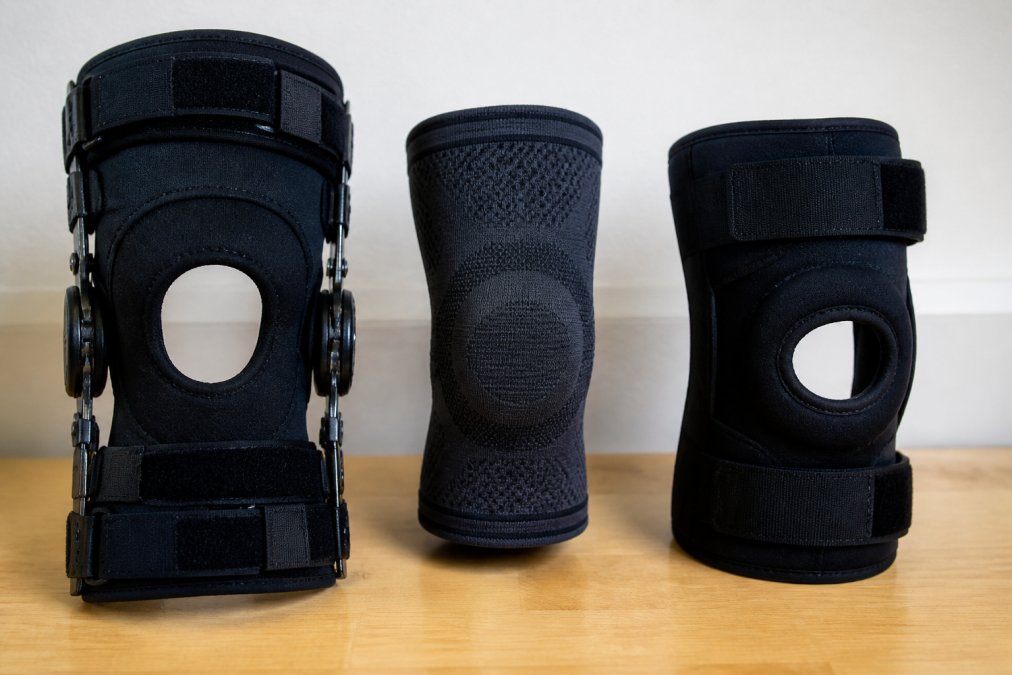
How We Evaluated These Orthopedic Braces
We evaluated these orthopedic braces against four criteria that matter most during musculoskeletal injury recovery: the level of mechanical support provided, the quality of the materials, the adjustability of the fit, and how well the design supports a structured rehabilitation protocol.
Rigid braces with hinged support scored higher for acute injury recovery and post-operative care because they prevent hyperextension and control range of motion (peer-reviewed research). Compression sleeves earned points for swelling control, proprioception, and comfort during daily wear. We also weighed clinical efficacy, meaning whether the brace actually stabilizes the joint during functional movements rather than just feeling secure in a seated position.
A common mistake is buying a brace based on the injury name alone. An ACL tear and patellar tracking dysfunction require completely different support mechanisms, even though both cause knee pain.
1. Breg Fusion Knee Brace: Best for Post-Surgical ACL Recovery
The Breg Fusion is the gold standard for the first weeks after ACL reconstruction, offering the rigid frame and adjustable hinge settings that protect a healing graft. Its ProForm technology allows for a precise, anatomical fit that reduces slippage, which is critical when you are locked in extension and sleeping with the brace on.
This is a professional-grade appliance, not an off-the-shelf support. The rigid frame prevents unwanted joint movement, and the adjustable hinges let your surgeon set specific flexion and extension limits as your range of motion returns. The main drawback is bulk; it is not comfortable under clothing, and you will likely abandon it once you progress to a functional brace.
It typically requires a professional fitting to ensure the hinge axis aligns with your joint line. A misaligned hinge causes friction and discomfort.
2. DonJoy Fullforce ACL Knee Brace: Best for Athletes Returning to Sport
For athletes transitioning from rehabilitation to sport-specific training, the DonJoy Fullforce offers the industry-standard protection against re-injury. Its Four-Points-of-use system and FourcePoint hinge technology control the tibia, preventing the rotational stress that puts the ACL at risk during cutting and pivoting movements.
The aircraft-grade aluminum frame is surprisingly light, which matters when you are sprinting and jumping. This brace is designed for the final phase of recovery, not for sleeping or daily lounging. It provides the confidence to push hard, knowing your knee has mechanical backup.
The catch is that it requires a professional fitting to work correctly. The cuff placement is precise, and an improper fit can create pressure points or fail to control rotation.
3. Bauerfeind Sport Knee Support: Best Compression for Athletic Recovery
The Bauerfeind Sport Knee Support is the best orthopedic brace for injury recovery when your issue is swelling, mild instability, or general joint pain during activity. It is a high-end compression sleeve with targeted compression zones and an anatomical knit that provides excellent proprioception, which is your body's ability to sense joint position. This feedback loop helps you avoid awkward movements that aggravate an injury.
The moisture-wicking fabric keeps you dry during intense workouts, and the brace maintains its shape after repeated washing. It is a durable piece of kit that athletes often keep using long after the original injury heals.
Its limitation is structural. A compression sleeve offers soft tissue support but will not protect an unstable knee from lateral forces. If your knee gives way or buckles, you need a hinged brace.
4. DonJoy Tru-Pull Lite: Best for Patellar Tracking Issues
The DonJoy Tru-Pull Lite addresses a specific problem: patellar subluxation and maltracking. Instead of wrapping the whole joint, its patented independent pull straps apply targeted tension to guide the kneecap through its proper groove during movement. This biomechanical alignment reduces pain and prevents the kneecap from slipping out of place.
Its low-profile design fits easily under pants, making it a practical choice for daily wear during a rehabilitation protocol. Many patients with patellofemoral pain find this far more effective than a generic sleeve because it corrects the root mechanical issue rather than just providing warmth and mild compression.
This brace is task-specific. It does not provide ligament support for the ACL or MCL, and it is not designed for high-impact sports. If your pain stems from cartilage wear rather than tracking, this brace will not help.
When to Use a Hinged vs Compression Brace
A hinged brace is the correct choice when you have ligament damage, post-operative instability, or your knee buckles during activity. A compression sleeve is the right choice when you have swelling, mild arthritis, or general overuse pain without mechanical instability.
The distinction comes down to what your knee needs to heal. Ligaments are the ropes that hold the joint together. If a rope is torn, you need a rigid frame to prevent stress on it. A compression sleeve does nothing to stop anterior translation of the tibia, which is the primary mechanism of ACL injury.
| Brace Type | Best For | Key Mechanism | Example Use Case |
|---|---|---|---|
| Hinged Rigid | ACL/MCL tears, post-surgical | Lateral stabilizers, hyperextension prevention | Early rehab after reconstruction |
| Compression Sleeve | Swelling, mild pain, tendonitis | Therapeutic compression, proprioception | Daily runs with runner's knee |
| Patellar Strap Brace | Kneecap tracking issues | Independent pull straps for alignment | Walking or stairs with subluxation |
The table above simplifies the decision, but your recovery stage matters. You might start with a rigid hinged brace, progress to a functional brace for sport, and finish with a compression sleeve for confidence. Many patients find that using a compression sleeve during the day helps with swelling, but they need the rigid brace for sleep to prevent involuntary muscle spasms from bending the knee.
How to Measure for a Knee Brace That Fits Correctly
Getting the right size is the most common point of failure when buying orthopedic braces for injury recovery, and a wrong size means the brace will not provide the intended support. For a knee brace, you need two measurements taken with the leg straight and the muscle relaxed.
First, measure the circumference of your thigh roughly 6 inches above the center of the kneecap. Second, measure the circumference of your calf about 6 inches below the kneecap. Compare the larger of these two numbers to the manufacturer's sizing chart, as most braces are sized by thigh circumference.
For hinged braces, the fit is more complex than a simple circumference. The hinge axis must align with the natural axis of your knee joint, which sits slightly behind the center of the kneecap. This is why the DonJoy Fullforce and Breg Fusion typically require a professional fitting. The American Academy of Orthopaedic Surgeons guidance on bracing emphasizes that a poorly fitted brace can cause nerve compression and skin breakdown.
If you are measuring at home, take the measurement in the morning when swelling is at its lowest, and always measure the injured leg. Do not assume both legs are the same size. A difference of even an inch changes the fit significantly.
How long to wear a medical brace each day
The duration depends entirely on your injury stage and your clinician's instructions. For post-surgical recovery, you may wear a rigid brace 24 hours a day for the first few weeks, removing it only for showering. As healing progresses, you will wear it only during weight-bearing activities and sleep. Compression sleeves for chronic pain management are typically worn during activity and removed at night to allow the skin to breathe.
A common mistake is wearing a compression sleeve to bed for weeks on end. This can lead to skin irritation and, in rare cases, reduce circulation. Your body needs brace-free time to maintain muscle strength, as prolonged immobilization accelerates muscle atrophy.
When to avoid bracing altogether
Bracing is not always the answer. If you have an acute injury with significant swelling, a compression sleeve applied too early can increase pressure and pain. Similarly, if you have a minor muscle strain, a rigid brace can actually delay recovery by preventing the muscle from engaging and rebuilding strength.
The National Institutes of Health research on functional bracing suggests that prolonged use of rigid braces can lead to muscle weakness and altered gait patterns. The goal of any brace is to protect the joint during the healing phase, not to become a permanent crutch. Your rehabilitation protocol should include exercises to strengthen the muscles around the joint so you can eventually wean off the brace entirely.
For most injuries, the progression moves from rigid support to functional support to no support. If you are unsure where you are in that timeline, consult your physical therapist. They can assess your joint stability and recommend when to transition. At Hudson Medical Co LLC, we understand that getting the right brace is only half the battle. The other half is knowing when to take it off.
Choosing the right brace for your recovery is a balance between protecting the injured structure and allowing the surrounding muscles to stay active. The best orthopedic braces for injury recovery provide the minimum support needed to feel safe while permitting as much normal movement as possible. If you are unsure which type fits your diagnosis, or if you need help with sizing and insurance authorization, the team at Hudson Medical Co LLC offers the dedicated, personal guidance that online marketplaces cannot match. We help you navigate the complexities of durable medical equipment so you can focus on healing. Shop all our braces and mobility aids to find the support you need.
Frequently Asked Questions
What is the best brace for a knee ligament injury?
For a knee ligament injury like an ACL or MCL tear, a rigid hinged brace such as the Breg Fusion or DonJoy Fullforce provides the most stability. These braces use a frame and hinges to control joint movement and protect the ligament during healing. For mild sprains, a compression sleeve with lateral stabilizers may be enough. The right choice depends on the severity of the injury and your activity level, so an orthopedic assessment is recommended.
How do I know which type of orthopedic brace I need?
The type of brace you need depends on the injury and the support level required. A compression sleeve offers light support, swelling control, and proprioception benefits for mild pain or overuse. A hinged brace provides mechanical stability for ligament injuries or post-surgical recovery. Consider whether you need to limit specific movements, like hyperextension, or simply manage discomfort. Your doctor or a qualified fitter can guide this decision.
Can I measure for a knee brace at home?
Yes, you can measure for a knee brace at home with a flexible tape measure. First, measure the circumference of your thigh about 4-6 inches above the kneecap. Then, measure your calf about 4-6 inches below the kneecap. Use the largest measurement to determine your size against the manufacturer's chart, as sizing can vary between brands.
How long should I wear a medical brace each day?
Wear time depends on your specific injury and recovery phase. During the acute injury recovery stage, a brace may be worn most of the day for protection. As healing progresses, your clinician may recommend wearing it only during activity or at night. Follow your rehabilitation protocol and the advice of your orthopedic specialist, since wearing a brace too long without guidance can lead to muscle atrophy.
Are expensive orthopedic braces worth the cost?
For complex injuries like an ACL tear, a rigid brace often provides significant support. For minor conditions, a compression sleeve often provides sufficient relief. The value depends on how well the brace matches your needs. A professional fitting can prevent buying the wrong type, saving money in the long run.